Have you ever had a massive reaction to something small — and then felt confused, embarrassed, or ashamed about it afterwards?
Perhaps someone used a particular tone of voice and you suddenly felt a surge of panic. Or a smell, a song, or an offhand comment sent you spiralling into a place you couldn't quite explain. Or you found yourself overwhelmed by something that, rationally, you knew wasn't a big deal — and yet your body and emotions were telling you otherwise.
If any of this sounds familiar, you're not broken. And you're not overreacting.
You may be experiencing what therapists call a trauma trigger — and understanding what that means can change the way you relate to yourself entirely.
What Is Trauma?
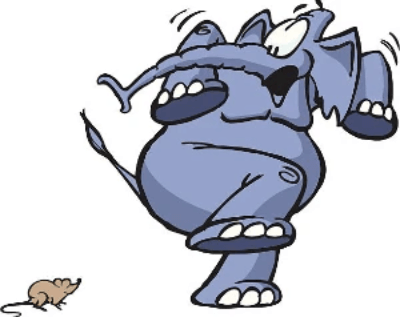
Before we talk about triggers, it helps to understand what trauma actually is — because it's often misunderstood.
Trauma is not defined by the event itself. It's defined by the impact that event has on your nervous system and sense of self.
This means that trauma doesn't only come from war, abuse, or catastrophic events — although those absolutely count. Trauma can also result from:
- Childhood emotional neglect or inconsistent caregiving
- Prolonged stress, instability or unpredictability growing up
- Bullying, humiliation or social rejection
- Medical procedures or illness
- The loss of a relationship, a person, or a sense of safety
- Witnessing something frightening or distressing
- Anything that overwhelmed your ability to cope at the time
What matters is not what happened, but whether your system was able to process and integrate the experience. When it couldn't — when the event was too much, too fast, or too soon — the memory gets stored differently.
Another way to look at it is that due to a number of factors like biology, the available resources, the response of caregivers etc, two people may experience an identical stressful event but only one of them might be traumatised by it. Try not to judge your reaction by other people's.
How Trauma Memories Are Different
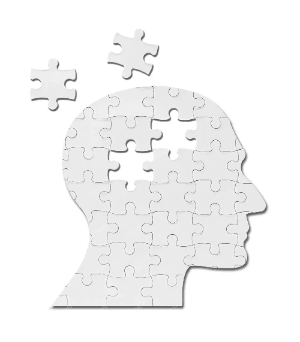
Ordinary memories are stored in a way that allows us to recall them as something that happened in the past. They have a narrative — a beginning, middle and end. Over time they fade, lose their emotional charge, and become part of our story.
Traumatic memories don't always work this way.
When an event overwhelms the brain's normal processing capacity, it can become stored as fragments — sensory impressions, images, physical sensations, and emotions — without the narrative context that tells the brain this is over, you are safe now.
This is why trauma can feel so present, even years after the event. The memory isn't filed away as history. In some ways, the brain still experiences it as happening now.

What Is a Trauma Trigger?
A trigger is anything — a sound, a smell, a tone of voice, a facial expression, a time of year, a physical sensation — that your nervous system associates with a past traumatic experience.
When the brain detects a trigger, it doesn't stop to reason. It reacts. Instantly, automatically, and often before your conscious mind has any idea what's happening.
This is your brain doing its job. It has learned, from experience, that certain cues signal danger — and it responds accordingly, flooding your body with the same stress response you felt during the original event.
The problem is that the trigger is rarely actually dangerous. It just resembles something that was.
So you might find yourself:
- Flooded with anxiety in a situation that others find perfectly ordinary
- Suddenly angry or withdrawn in response to something your partner said
- Freezing, shutting down, or dissociating seemingly out of nowhere
- Feeling overwhelmingly unsafe in a situation that is, objectively, fine
And then — often — comes the shame. Why am I like this? Why can't I just get over it? What is wrong with me?

Nothing Is Wrong With You
Your nervous system learned to respond this way because, at some point, it needed to. These responses were protective. They kept you safe — or as safe as possible — during something that felt threatening or overwhelming.
The difficulty is that the nervous system doesn't automatically update when circumstances change. It keeps running the same protective programmes, long after they've stopped being necessary.
This is one of the most important things to understand about trauma: your reactions make complete sense given what you've been through. They are not signs of weakness, instability, or being fundamentally broken. They are the entirely understandable legacy of experiences that were too much to process at the time.
Common Trauma Triggers
Triggers are deeply personal — what affects one person profoundly may not affect another at all. But some common categories include:
Sensory triggers: Smells, sounds, songs, textures, tastes, or visual cues associated with a past experience
Interpersonal triggers: Certain tones of voice, facial expressions, raised voices, criticism, silence, or physical proximity
Situational triggers: Particular places, times of year, anniversaries, or circumstances that resemble a past event
Internal triggers: Physical sensations such as a racing heart, tightness in the chest, or feeling out of breath — which the body associates with past moments of danger
Emotional triggers: Feeling helpless, trapped, criticised, abandoned, or invisible — even in situations where the actual threat is small

What Can Help?
The first and most important step is awareness — understanding that what's happening has a name, a reason, and is not your fault. Becoming aware is empowering and can help alleviate symptoms.
Beyond that, healing from trauma is possible. It takes time, safety, and usually the support of a good therapist. In therapy, we work gently and at your pace to:
- Help your nervous system learn to distinguish between past danger and present safety
- Build a greater sense of internal safety and stability
- Develop compassion for the parts of you that have been working so hard to protect you
- Process the fragmented memories that are driving your reactions
This isn't about erasing the past. It's about loosening its grip on your present — so that you can respond to life as it is now, rather than as it once was.

A Final Thought
If you find yourself repeatedly overwhelmed by reactions you can't explain, please know this: there is always a reason. Your responses are not random, and they are not character flaws.
They are messages from a part of you that has been trying, all along, to keep you safe.
With the right support, it is possible to help that part of you finally rest.
Lukas Wooller is a counsellor and psychotherapist in Fitzroy, Melbourne, specialising in Emotion-Focused Therapy. He works with adults experiencing trauma, anxiety, depression and more. Sessions available in-person and via telehealth across Australia.
If this post resonated with you, please get in touch to discuss how Lukas can help you..
References
Van der Kolk, B. (2014). The Body Keeps the Score. Penguin Books.
Levine, P. (1997). Waking the Tiger: Healing Trauma. North Atlantic Books.
Herman, J. (1992). Trauma and Recovery. Basic Books.